

If you’ve ever tried to improve your website’s visibility on Google, you’ve probably heard terms like on-page SEO, technical SEO, and off-page SEO. While they’re often mentioned together, they serve very different purposes — and misunderstanding them can slow down your growth.
In this guide, we’ll explain the differences between on-page SEO and technical SEO in plain language, show how off-page SEO fits into the picture, and help you understand how all three work together to drive traffic, rankings, and real business results.
What Is On-Page SEO?
On-page SEO focuses on everything visitors see and interact with on your website. It’s about creating content that’s useful, easy to read, and clearly structured — while also making sure search engines understand what each page is about.
But on-page SEO isn’t just about placing keywords. It’s about delivering a good experience for real people while helping search engines connect your content with the right searches.
Here are the core elements that make on-page SEO effective.
Page Titles and Meta Descriptions
Your page title is the headline users see in search results, and the meta description is the short summary underneath it. Together, they play a huge role in whether someone clicks on your site or scrolls past it.
Strong titles and descriptions are clear, relevant, and written for humans first — with keywords included naturally. When done right, they can significantly improve click-through rates without changing your rankings at all.
Headings and Content Structure
Headings help organize your content and guide readers through the page. A clear hierarchy (H1, H2, H3) makes long content easier to scan and helps search engines understand what each section is about.
Well-structured content keeps visitors engaged longer, which is a positive signal for SEO.
Keyword Usage
Keywords are still important, but how you use them matters more than how often you use them. Search engines are smart enough to understand context, so your goal should be to write naturally while addressing the topics your audience is searching for.
Smart keyword placement includes:
Page titles and headings
Early sections of your content
Image descriptions
Internal links
Overusing keywords can actually hurt performance, so clarity always wins.
Internal Linking
Internal links guide users to related content on your website and help search engines understand how your pages connect.
They improve navigation, spread authority across your site, and encourage visitors to explore more pages — which can lead to better engagement and conversions.
Image Optimization
Images should enhance your content, not slow it down. Optimized images load faster, improve accessibility, and give search engines additional context through alt text.
Faster pages lead to better user experiences, and better experiences lead to stronger SEO performance.
Why On-Page SEO Matters
On-page SEO is where your message meets your audience. It helps your content rank, keeps visitors engaged, and increases the chances that users take action once they land on your site.
Even the best technical setup won’t help if your content is confusing, poorly written, or hard to navigate.
What Is Technical SEO?
Technical SEO focuses on how your website works behind the scenes. It ensures that search engines can crawl, understand, and index your site properly — and that users can access it without friction.
Think of technical SEO as the infrastructure that supports everything else.
Website Speed
Slow websites frustrate users and hurt rankings. Even small delays can cause visitors to leave before your content loads.
Improving site speed often involves optimizing images, reducing unnecessary scripts, and using reliable hosting. Faster sites almost always perform better in search results.
Mobile Optimization
Most users browse on mobile devices, and Google primarily evaluates the mobile version of your website when ranking pages.
If your site is difficult to read, tap, or navigate on a phone, you’re likely losing both traffic and potential customers.
Secure Browsing (HTTPS)
A secure website protects user data and builds trust. Search engines favor HTTPS sites, and visitors are far less likely to engage with websites that appear unsafe.
Sitemaps and Crawlability
An XML sitemap helps search engines discover your pages more efficiently. Combined with proper internal linking, it ensures important pages aren’t overlooked.
Robots.txt and Index Control
The robots.txt file tells search engines which pages to crawl and which to ignore. This prevents wasted crawl budget and helps keep private or duplicate pages out of search results.
Fixing Errors and Broken Pages
Broken links, server errors, and duplicate content can confuse both users and search engines. Regular technical audits help identify and resolve these issues before they impact rankings.
Why Technical SEO Is Essential
Without technical SEO, even great content may never appear in search results. A strong technical foundation ensures your site is fast, secure, accessible, and easy for search engines to understand.
It’s not flashy — but it’s critical.
On-Page SEO vs Technical SEO: The Key Difference
The simplest way to think about it:
On-page SEO focuses on content and user experience
Technical SEO focuses on performance and accessibility
On-page SEO attracts and engages users.
Technical SEO makes sure your site can be found and used.
Neither works well without the other.
Where Does Off-Page SEO Fit In?
Off-page SEO refers to everything that happens outside your website that affects your rankings. It’s largely about credibility and authority.
The biggest factor here is backlinks — links from other websites pointing to yours. These act as trust signals to search engines, showing that your content is valuable and worth recommending.
Other off-page factors include:
Brand mentions
Online reviews
Social media exposure
Guest content and partnerships
Off-page SEO helps prove that your website deserves to rank.
How All Three Types of SEO Work Together
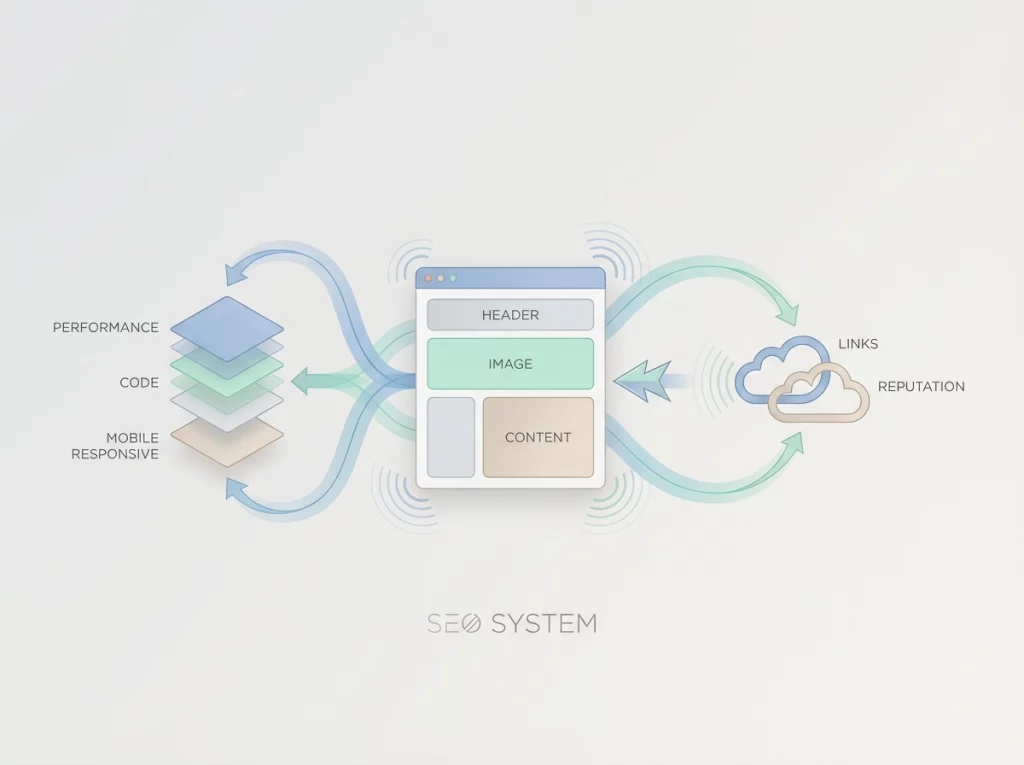
Successful SEO is never about one tactic. It’s a system.
Technical SEO makes your site accessible.
On-page SEO delivers value to visitors.
Off-page SEO builds trust and authority.
When all three are aligned, your website is far more likely to rank, attract qualified traffic, and convert visitors into customers.
Which SEO Should You Start With?
If you’re building or improving a website, start with the foundation.
Fix technical issues so your site loads quickly and works everywhere
Optimize and improve your content with strong on-page SEO
Build authority through off-page SEO and backlinks
Skipping any of these steps can limit the impact of the others.
Final Thoughts
Understanding the difference between on-page SEO and technical SEO helps you make smarter decisions about where to invest your time and budget. One brings people in, the other makes sure they can get there — and off-page SEO helps build long-term credibility.
If you want a strategy that balances all three and delivers real growth, working with an experienced SEO team can save you time and costly mistakes.
Want to improve your rankings and turn traffic into results?
Visit https://coremedia.click and let’s build an SEO strategy that actually works.