
Email marketing doesn’t stop when someone clicks your message. In fact, that click is just the beginning.
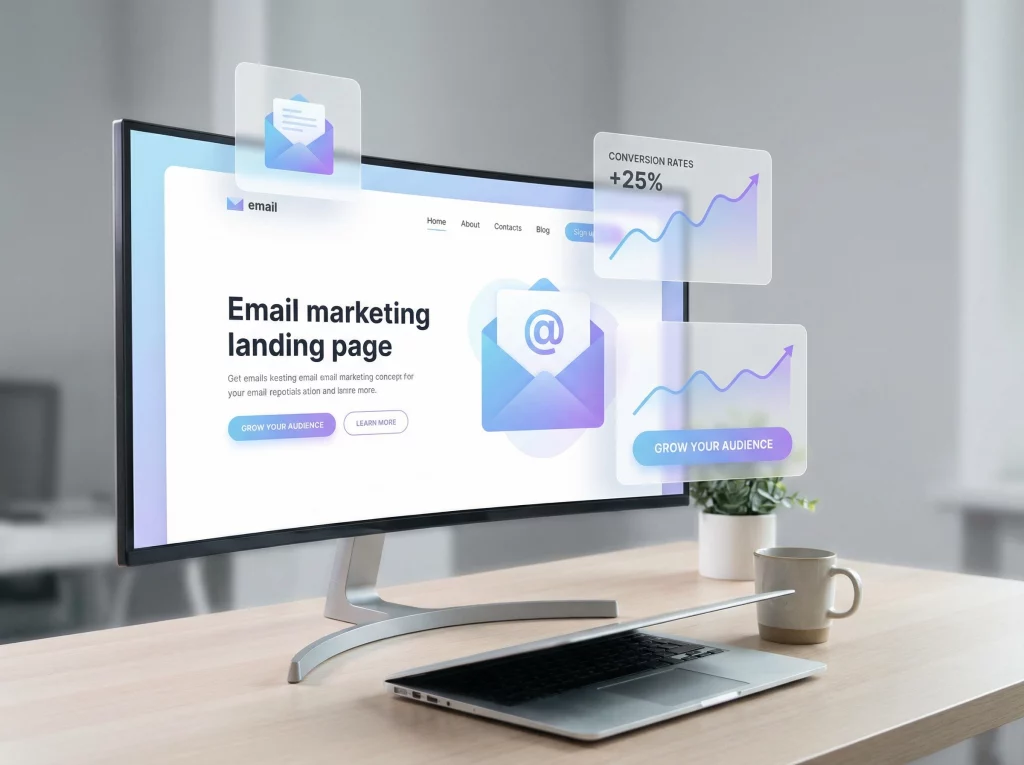
No matter how strong your subject line or how persuasive your email copy is, conversions happen (or don’t happen) on your landing page. A well-built email marketing landing page is where interest turns into action — sign-ups, purchases, bookings, or downloads.
The goal isn’t just traffic. The goal is guiding your audience toward a clear next step while collecting insights that help you improve future campaigns.
High-performing email campaigns combine smart targeting, relevant messaging, and conversion-focused landing pages. When those elements work together, email marketing remains one of the highest-ROI channels in digital marketing.
Below are ten practical tips to help you optimize your email landing pages for higher conversions and better campaign results.
1. Lead With a Clear, Compelling Headline
Your landing page headline should instantly confirm one thing:
“I’m in the right place.”
When users click from an email, they expect consistency. Your headline should reinforce the promise made in the email — not introduce something new or vague.
Strong headlines:
Focus on a single benefit
Use simple, direct language
Spark curiosity or urgency without overhyping
If your conversion rates are low, testing different headline variations is one of the fastest ways to uncover what resonates.
2. Keep the Page Focused on One Goal
Every email landing page should have one objective — and only one.
Trying to sell multiple products, explain several offers, or cover too much information at once dilutes attention and reduces conversions. Short, focused pages perform better because they make decision-making easier.
If it doesn’t support your primary goal, remove it.
Less friction = more conversions.
3. Make Your Call-to-Action Impossible to Miss
Your CTA should be obvious, specific, and action-oriented. Don’t make users guess what to do next.
Effective CTAs:
Use clear verbs (Download, Book, Get, Start)
Highlight value, not just action
Stand out visually from the rest of the page
You can also experiment with urgency — limited-time offers, availability reminders, or exclusive access — as long as it feels authentic.
4. Match Your Design to the Email Experience
Consistency builds trust.
When users move from your email to your landing page, the visual language should feel seamless. Colors, typography, imagery, and tone should align with your brand and the original message.
A well-designed page doesn’t mean heavy visuals. In fact, strategic white space helps guide attention and makes your content easier to absorb.
Good design supports conversion — it never competes with it.
5. Optimize for Mobile First
Most emails are opened on mobile devices, which means your landing page must perform flawlessly on smaller screens.
Mobile-friendly landing pages:
Load quickly
Use readable text sizes
Have buttons that are easy to tap
Avoid clutter and unnecessary elements
If users open your email but don’t convert, poor mobile experience is often the reason.
6. Segment Before You Send
Landing page performance starts with the audience you send traffic from.
Sending the same email to everyone rarely works. Segmenting your list allows you to tailor both your email message and your landing page to specific needs, behaviors, or stages of the buyer journey.
The more relevant the message feels, the more likely users are to convert.
7. Personalize Beyond First Names
Modern email marketing is about relevance, not just personalization tokens.
Your landing page should reflect:
Where users are in the funnel
What problem they’re trying to solve
Why this offer matters to them now
Personalized CTAs and content aligned with user intent consistently outperform generic messaging.
8. Build Trust With Social Proof
People trust people.
Adding testimonials, reviews, client logos, or case highlights can significantly increase conversions by reducing hesitation. Social proof reassures visitors that others have taken the same action — and benefited from it.
Even a short quote or a recognizable brand logo can make a difference.
9. Respect Consent and Transparency
Email marketing only works when it’s permission-based.
Every subscriber should clearly understand why they’re receiving your emails and how to opt out. Transparency builds long-term trust and protects your deliverability.
Avoid shortcuts like purchased lists — they damage reputation, reduce engagement, and can get your account flagged or shut down.
10. Use Data to Continuously Improve
Optimization doesn’t end after launch.
Tracking performance helps you understand what’s working and what’s holding conversions back. Analytics tools reveal where users drop off, what they interact with, and how they move through your page.
Heatmaps, A/B testing, and conversion tracking allow you to refine layouts, copy, and CTAs based on real behavior — not assumptions.
Turning Clicks Into Results
There’s no universal “perfect” conversion rate for email marketing. Benchmarks vary by industry, audience, and offer. What matters most is steady improvement over time.
Email marketing works best when strategy, design, and data are aligned. A conversion-focused landing page bridges the gap between attention and action — and turns email traffic into measurable growth.
If you’re ready to build email campaigns and landing pages that convert consistently, a dedicated strategy makes all the difference.
👉 Talk to our team and start optimizing your email marketing today:
https://coremedia.team/contact/