
If your Meta Ads aren’t performing the way you expected, the issue is rarely the platform itself. More often, the problem lies in how creatives are tested. Many businesses burn through ad budgets without ever discovering what actually works, simply because their testing process lacks clarity and structure.
Common mistakes happen fast. Some brands test too few variations. Others change visuals, copy, audiences, and offers all at once. Many wait far too long to make decisions, letting underperforming ads drain their budget. The result is frustration, wasted spend, and inconsistent performance.
A smarter testing approach changes everything. With the right system, you can identify strong creatives within days, stop losing ads early, and scale only what’s proven to convert.
Why Creative Testing Matters So Much on Meta
Creative is the strongest performance lever inside Meta’s ad ecosystem. While targeting and bidding still matter, Meta’s algorithm rewards ads that capture attention, generate engagement, and convert efficiently. When your creative resonates, delivery improves and costs naturally drop.
On the other hand, weak creatives struggle to get traction. As engagement drops, CPMs rise and reach becomes limited. This is why creative testing isn’t optional. It’s the foundation of sustainable Meta Ads performance.
Brands that test creatives correctly tend to lower their cost per result over time, build a repeatable system for finding winning ads, and avoid burnout from ad fatigue by refreshing content continuously.
Focus on One Variable at a Time
One of the fastest ways to ruin a test is to change too many elements at once. When an ad fails, you won’t know whether it was the image, the headline, or the call to action that caused it. Even worse, when an ad performs well, you still won’t know why.
Clean testing comes from isolation. If clicks are low, focus only on testing visuals. If people click but don’t convert, experiment with different headlines or value propositions. If engagement is flat, adjust the call to action. By keeping everything else consistent, the data becomes clear and actionable.
A Simple Budget Setup That Works
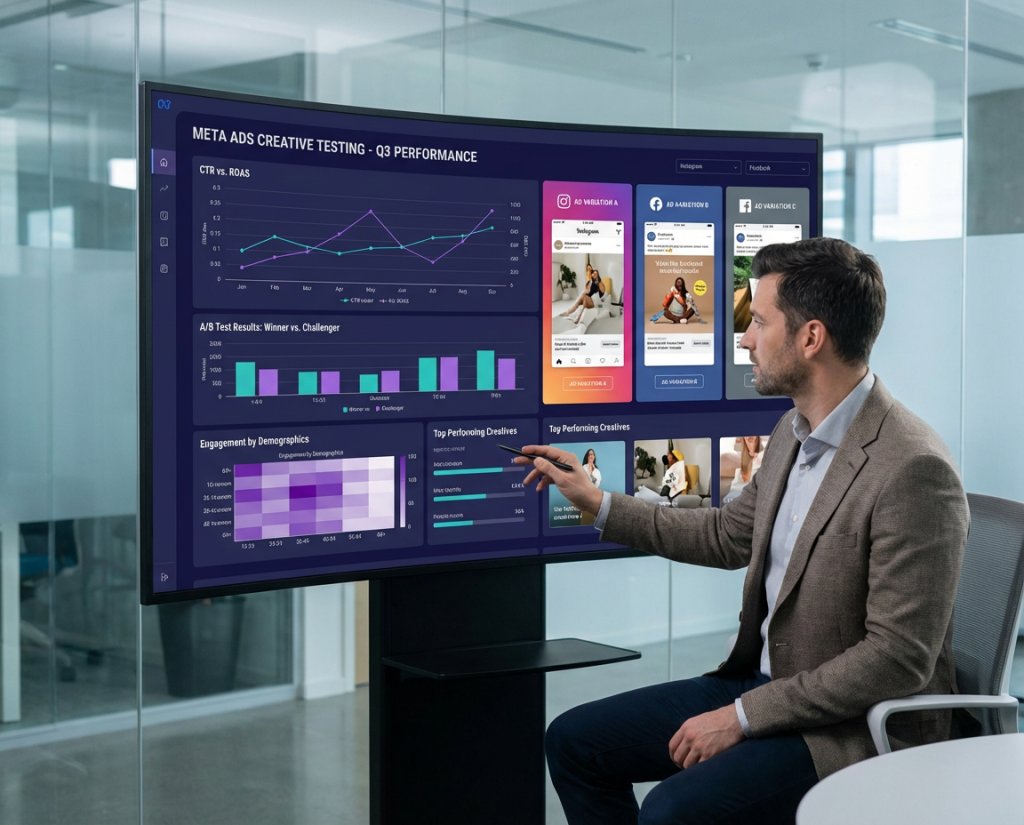
You don’t need massive spend to run effective tests. A focused setup with five creative variations and equal budget distribution is often enough to surface a winner. Keep the same audience, campaign objective, and bid strategy so the creative is the only variable being evaluated.
Let the test run without interference. Meta’s algorithm needs stable signals, and constant changes only slow learning. Within a few days, performance patterns will emerge naturally.
Decide Fast and Cut What’s Not Working
One of the biggest performance killers is hesitation. Many advertisers tweak ads too early or let weak creatives run for too long. The goal of testing is decision-making.
Give your ads enough time to collect meaningful data, then act. Pause underperformers quickly and reallocate budget to the strongest creatives. Every dollar saved from bad ads can be used to scale what’s already working.
Scale With Control, Not Emotion
Scaling isn’t about pushing budget aggressively. It’s about maintaining stability while increasing spend. Gradual budget increases help preserve performance and prevent algorithm shock. As spend grows, monitor key metrics closely and keep testing new variations so performance doesn’t plateau.
The brands that scale profitably aren’t testing more ads. They’re testing smarter, learning faster, and scaling with intention.
Creative Testing Is a Continuous Advantage
Meta Ads change constantly, but creative remains the biggest driver of success. A structured testing framework ensures that every campaign produces insights, not just impressions. Over time, this builds a reliable system where decisions are driven by data, not guesswork.
If you want help building a creative testing strategy that actually improves performance and protects your ad budget, our team can help you implement a proven, data-driven approach tailored to your goals.
👉 Talk to Core Media about improving your Meta Ads: https://coremedia.team/contact/